The explosive three-part docu-series, Hillsong: A Megachurch Exposed, will premiere on Thursday, March 24 on discovery+, the definitive non-fiction, real-life subscription streaming service, with all three episodes available on that date. Featuring interviews with Hillsong insiders, megachurch experts and Ranin Karim, the woman whose five-month affair with celebrity senior pastor Carl Lentz led to his downfall, the series will explore the high-profile, star-studded church’s alleged exploitation, abuse and cover-ups.
Is this church as it is described in the Book of Acts? I am sure it is not, just as the institutional church model is not God’s model for His church.
We are so excited by the amazing fruit being harvested at the Last Reformation Kickstart Weekends that are happening all over the world. They are transforming people’s lives. Even churches are being transformed as you will see in the video below.
Here a whole church got transformed, the Pastor got baptized, and they are now changing the way they are doing church and will go and start small groups. This is transformational!
If you live in the USA and have the opportunity to go and join a Kickstart near you, Torben and his team would love to see you. Keep your eyes on TLRMap.com, where there are often new Kickstarts. For example, in California, a new Kickstart will happen at the beginning of the year in the southern part.
However, you don’t need to wait for a Kickstart Weekend. You can host your Kickstart by using the Kickstart Package. The Kickstart Package comprises seven videos where you get all the teaching for a Kickstart Weekend. The Package comes with a leaders book along with a workbook. Of course, it is not the personal contact you get in a Kickstart Weekend. However, it allows you to host it where you are, such as in your living room. You can invite people over to your home, and you can be the host. Use this tool to reach out to others around you just like other people have done.
Below is a testimony from Jeff and Diana in Pennsylvania.
Testimony from Pennsylvania
Jeff and Diana Ellis hosted a Kickstart in a conference center in downtown Butler, PA. This was the first time they used the Kickstart Package in a seminar-type event vs. a home setting. They utilized the Kickstart Package videos, engaging the workbooks. There were about 25 people in attendance, two of the attendees got baptized, and several received prayer and personal ministry. Jeff stated, “we learned that anyone could do a Kickstart using this package. However, if you have more than four attendees, it is good to have other disciples present to minister alongside you. Overall, for our very first Kickstart, I believe this was a successful event!”
Jeff and Diana plan to follow up with several people for Bible Discovery Groups and do more Kickstarts.
This post is taken from a great article by Shane Idleman: The great shrinking church in America.
It’s clear that many churches have closed or have considerably shrunk in size since COVID-19. Reasons range from “church-goers are still scared to return,” to “they prefer watching live feeds.” But why have bold churches experienced tremendous growth? This issue is much deeper — it’s crystal clear that people are hungry for the truth.
As a church in California located in Los Angeles County, I understand the enormous challenges of pastoring in these dire times. But, if the truth is told, the COVID crisis simply revealed the foundation of many churches, as well as the heart of many pastors. But thank God, there is hope!
Pastors, I’m writing this to you to encourage you to be bold as you lead your congregation through these difficult and challenging times. But this boldness won’t come naturally, it will come supernaturally. It will have a cost:
“Life-giving preaching costs the preacher much — death to self, crucifixion to the world, and the travail of his own soul. Crucified preaching only can give life. Crucified preaching can come only from a crucified man” (E.M. Bounds).
The fire of the Spirit is contagious
On October 25, 2021, we began having church every night at 6 pm for two straight weeks. At times, the atmosphere was overwhelming — a full altar, dozens of baptisms, the demonic realm being crushed and countless lives changed, both in person and through Livestream. As the old-timers used to say, “God heard our cries and showed up!” The key verse for us was Isaiah 64:1, “Oh, that You would rend the heavens! That You would come down! That the mountains might shake at Your presence.” (You can view the services here.)
Speaking boldly is no longer optional, it’s essential. That’s the missing ingredient today. God is no respecter of persons, status, or achievement, but He is a respecter of principles (Acts 10:34). If you seek Him with all your heart you will find Him. Then you will be better equipped to lead your congregation to the Fountain of Living Water once you yourself have drunk deeply. The fire of the Spirit is contagious.
This doesn’t mean that your church will grow; it could shrink, but it does mean that you’ll now have the power of the Spirit resting upon your life. Churches filled with the Spirit do the works of the Spirit. Jesus said that “whoever believes in Me will do the works I have been doing, and they will do even greater things than these because I am going to the Father” (John 14:12 NIV).
If your church doesn’t look like the New Testament church, are you sure that you’re truly “having church”?
Dead is for a graveyard, not a church
The Christian life is to be living and vibrant, not dry and dead. It begs the question: “Where are the rivers of living water that Jesus spoke about in John 7:38?” When it comes to experiencing a spiritual awakening (revival), it can’t be worked up, it must be brought down from heaven.
In Lev. 9:23-24, the glory of the Lord appeared to all the people and the fire came down and consumed the burnt offering. God brought down the fire, but the responsibility fell on the leaders to keep the fire burning. They were to remove the waste but not the fuel. The same holds true for you and me. We must remove the waste of pride and add the fuel of humility.
Ignite your church with prayer meetings and worship nights. Humble yourself and lead the way and find comfort on the altar as you cry out to God for boldness. The two-week event described above was over a decade in the making as we persisted in seeking the heart of God. He truly is a “rewarder of those who diligently seek Him” (Heb. 11:6). When God chooses to give us a measure of revival in our bondage, worship, humility, and obedience, He will keep the flame going.
The beauty of brokenness
The beauty of brokenness is that humility crushes pride and ushers in the presence of God. Moses spent years on the backside of the desert as God broke and prepared him. Joshua’s humility no doubt came from lingering in the presence of the Lord. Isaiah was completely broken when he cried, “Woe to me! … I am ruined! …. My eyes have seen the King, the LORD Almighty” (Isaiah 6:5). Jeremiah collapsed and cried out for humility in the people, “My soul will weep in secret for your pride” (Jeremiah 13:17).
The Psalms are saturated with the brokenness of David, and Jesus’ disciples had to be crushed like olives so the anointing oil could flow. Paul had to be knocked to the ground and his eyes blinded by the glory of God before true humility became a mark of his ministry.
Do you sound like a voice “crying in the wilderness” because you’ve been touched by God, or a voice whining in the wilderness because you’re dying spiritually? You can change that today.
We provide the sacrifice, He provides the fire
When you lose intimacy with God, you lose boldness and the Spirit’s fire. Return to Him, and He will return to you (Zechariah 1:3). The strength of your church is in its purity and spiritual power, not in its numbers. God doesn’t need a majority — He is the Majority. We are not CEOs running a business, we are watchmen warning a nation. Prayer can no longer be a footnote at the end of a sermon; instead, prayer and worship must guide the church in these critical times.
How can you receive a measure of revival in these dire times if there is no desperation? God can’t pour into your heart if it’s already full of self: Self-willed. Self-sufficient. Self-made. Self must die in you before God can really live within you.
The greatest hindrance to revival is within your own heart. It’s time to break up your fallow ground and seek the Lord while He still may be found (cf. Hosea 10:12). Again, although we can’t work revival up, God can bring it down from heaven if we prepare the soil of our hearts. We provide the sacrifice — He provides the fire.
Shane Idleman is the founder and lead pastor of Westside Christian Fellowship in Lancaster, California, just North of Los Angeles. Shane’s sermons, articles, books, and radio program can all be found at shaneidleman.com or wcfav.org
My followers know that I believe the church in the end times will be the church as described in the Book of Acts. I promote the church model as modeled by Francis Chan which is House Churches, no paid pastors, and no buildings. Nevertheless, I thought the truths expressed by Pastor Shane Idelman are worth a post.
Where in the Bible are we commanded to plant churches? The simple and obvious response is, “it is not commanded.” Planting churches flows naturally out of making disciples. The heart of the church’s mission is to make disciples who make disciples.
In the New Testament, a disciple is more than someone who grows in their theological knowledge of God. A disciple fellowships with other believers, worships in a community, and prays like those assembled in a house in Acts 4.
“And now, Lord, look upon their (the Worlds) threats and grant to your servants to continue to speak your word with all boldness, while you stretch out your hand to heal, and signs and wonders are performed through the name of your holy servant Jesus.” And when they had prayed, the place in which they were gathered together was shaken, and they were all filled with the Holy Spirit and continued to speak the word of God with boldness.” Acts 4:29-31
Empowered by the Holy Spirit, a disciple then boldly declares the word of God such that more and more people become followers of Jesus.
Missionaries have historically been the most vital source of a nation’s social development. These findings yield two important conclusions about the work of Protestant missionaries. Their message was good for the world and their focus was making disciples.
This understanding of a disciple is highlighted throughout the New Testament. Through a study of the early movement in Ephesus, we see at least thirteen characteristics common to them all.
Disciples are respectful of people and culture when they engage in God’s mission (Acts 19:7, 37).
Disciples surrender to God’s will and maintain the work of their first love in a theocentrically focused missiological theology (Eph 1; Eph 5:18-19; Rev 2:4).
Disciples declare the mystery of Christ to the nations (Eph 3:4-10, 1 Tim 2:1-4).
Disciples are equipped by movement leaders for ministry (Eph 4:12; 1 Timothy).
Disciples exhibit the fruit of the Spirit (Eph 4-5).
Disciples are empowered by the Holy Spirit to be witnesses (Eph 5:18-19, 2 Tim 1:7).
Disciples are godly fathers and mothers, husbands and wives, employees and employers (Eph 5:22-6:9).
Disciples pray for opportunities to share the gospel because they know God is most glorified when more people are worshipping him (Eph 6:18-20, 1 Tim 2:1-4).
Disciples stand up for the marginalized (1 Tim 2:8-15, 5:3-16; Rev 2:6).
Disciples learn sound doctrine from movement leaders who can teach (1 Tim 4:7).
Disciples are willing to suffer for the sake of the gospel (2 Tim 1:8).
Disciples are committed to multiplying more disciples (2 Tim 2:2).
Disciples defend the faith against false teaching (Rev 2:2).
Extracts from an article “Is Church Planting a Biblical Mandate?” October 28, 2020, by Jackson Wu
Neo-pagan Anglicanism is beautifully packaged in some of the most elegant liturgy, music, and tradition in Christianity. But it has become liturgy for the sake of liturgy, music for the sake of music, and tradition for the sake of tradition. As the apostle Paul wrote, they are “having the appearance of godliness, but denying its power” (2 Timothy 3:5). And as Athanasius argued against Arius’s heresy, the Jesus whom they promote is not the Jesus of which the Bible speaks.
As a result of this tragic accommodation to culture, Foley Beach, Archbishop of the Anglican Church in North America, eschews the flaccid slogans of the hierarchy from Canterbury and New York City about “communion across difference,” “mutual flourishing,” and “walking together” because there can be no truce with heretics and schismatics who advance a counterfeit gospel (Romans 16:17–18).
Speaking with a prophetic mantle, Beach observes that “liberal innovations in theology and sexual ethics” are hidden within an orthodox façade, comparable, I would say, to the Trojan horse.”
The Gospel of John probably best describes the future of orthodox Anglicanism.
“Verily, verily, I say unto you, except a corn of wheat fall into the ground and die, it abideth alone: but if it dies, it bringeth forth much fruit” John 12:24, KJV
“The ‘Anglican experiment is not ending in failure,” says Eliud Wabukala from Kenya and Mouneer Anis from Egypt, “but is on the verge of a new and truly global future in which the original vision of the Reformers can be realized as never before.” When Archbishop of Canterbury Lord George Carey said in 1990, “You don’t have to be English to be Anglican,” he probably could not have foreseen that today, “Anglicans in the Global South represent more than 80 percent of the members of the Anglican Communion,” according to Anis.
From Wabukala’s address to the faithful of the Global Fellowship of Confessing Anglicans “At the heart of our gathering will be the Lord Jesus’ Great Commission to make disciples of all nations (Matthew 28:19) and as we commit ourselves wholeheartedly to that purpose, we can trust in the promise that comes with the command, the promise of His presence ‘to the end of the age’ (Matthew 28:20).
Much of the information in this article has been extracted from the book The Future of Orthodox Anglicanism by Gerald R. McDermott
A major issue afflicting the Church is the “clergy-laity mentality.” It is a pervasive mindset where the paid clergy leads the church and they are called “pastors.” They do most of the ministry work and laypeople serve the ministry of that pastor.
The Apostle Paul writesthat the Church, the household of God, is “built on the foundation of the apostles and prophets, with Christ Jesus Himself as the chief cornerstone.”Ephesians 2:20
Paul continues that the Lord gave fivefold offices for the edification of the Church, specifically
“apostles, prophets, evangelists, pastors and teachers to equip his people for works of service, so that the body of Christ may be built up until we all reach unity in the faith and in the knowledge of the Son of God and become mature, attaining to the whole measure of the fullness of Christ.”Ephesians 4:11-12
All five of these gifts are needed and on a broad-based level, you need the apostles and prophets working together, hearing from God together. To use military terminology: apostles [are] the generals. The prophets being the seers, they’re the ones getting the intel [from God],
For a local church, there needs to be impartation from all those gifts, equipping from all those offices to equip people to minister to those who are not part of the Church, not just to minister to each other. The apostles are the builders, the church-planters, those who are trainers and equippers. And the prophetic is to come alongside them to help guide and speak to that — what is the Lord saying right now in the present. All five offices are needed to work together so that the Church can hear the full counsel of God.
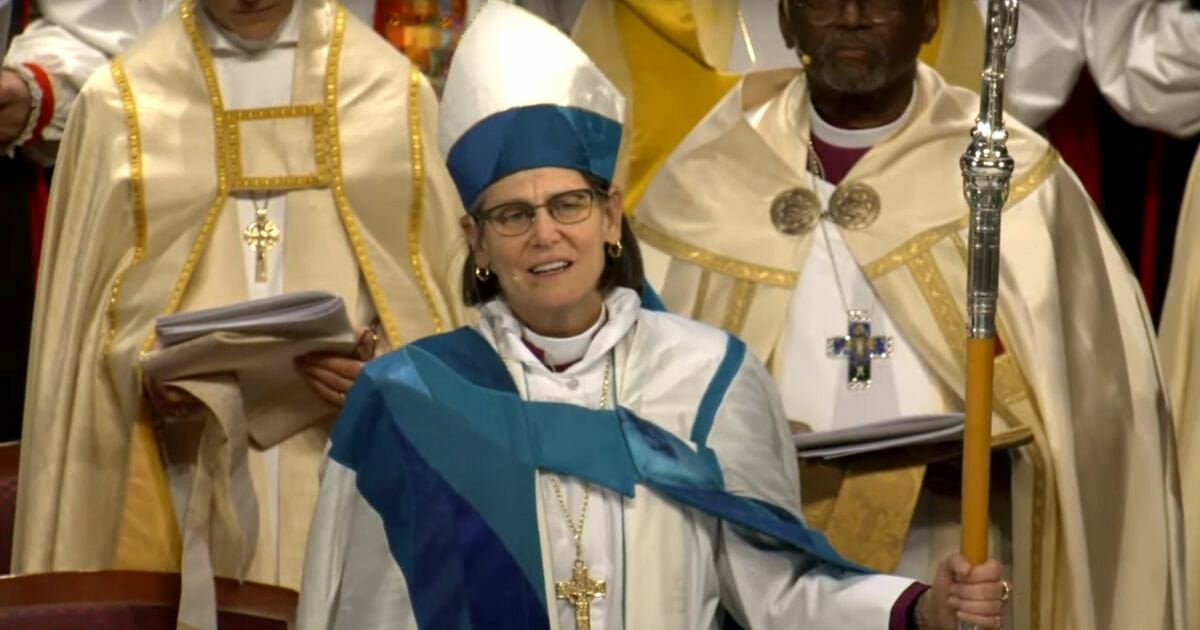
Episcopal church ordains lesbian Bishop
Unfortunately, the institutional church came up with the model of training one man, then one man or woman and now transgender as well to be the pastor/leader of the church. This model is not Biblical and is in fact the apostate church Jesus (Matthew 24:12) and Paul (2 Thessalonians 2:1-4 ) spoke of as one of the “end times” signs. It has no understanding of the fivefold gifts working together to see each and every believer functioning and bringing the Kingdom into their workplace, in the marketplace, into their school, then a greater expression of Jesus is manifested in society. What is needed is small-a apostles?
Larry Kreider of DOVE International — an interdenominational global family of churches and ministries on six continents believes that an apostolically inclined small-a apostle is motivated by and is thinking on a macro, big-picture level, and wants to see the Kingdom of God extend across their city, state, region, nation and world. As with any other spiritual gift and vocations, this gifting is to be called out and affirmed by others in the Body of Christ. To function in these gifts, one needs to see the gifting’s in others, It’s not just someone who prophesies or carries a prophetic gift, but someone who trains up and pours into others so they can mature spiritually.
This is truly the church as described in the Book of Acts and will be the church that overcomes during the tribulation in the last days before Jesus returns “Be faithful until death, and I will give you the crown of life. “Anyone who has an ear should listen to what the Spirit says to the churches. The victor will never be harmed by the second death.” Revelation 2:10-11
Love this song from Justin Bieber and Chandler Moore posted by Churchome. They are a community built on the life and teachings of Jesus.
Extract from their website:
“The name, “Churchome,” reflects our belief that we are going to be a church that functions like a home, that looks like a home, and that loves like a home. And ultimately, what we experience on earth will look a lot like heaven.
Luke 15 has become a hallmark passage for our community. The idea and concept of home is centric in scripture. It is the idea that every human is a sojourner and he/she is returning home. Home is not so much brick and mortar, an actual space or room. Home is a place and a posture our soul discovers in Jesus—where the created returns to a loving relationship with the Creator. Bringing people home is what God does. Whether prodigals or prodigies, artists or intellectuals, rebels or rejects, God’s arms are open to all.”
Over the last few decades in the West, and particularly in America, we have seen the destruction of the institution of marriage, the removal of God’s Word in most areas of public life, particularly schools, and the embracing of Critical Race Theory. Moreover, most pulpits are silent about governmental abuse, the LGBTQ agenda, and the blatant murdering of millions of babies. This is an indictment against the nations and the church – our silence speaks volumes. Are God’s people watchmen or cowards?
The pulpit regulates the spiritual condition of God’s people which affects the nation. A lukewarm, sex-saturated culture (and church) simply reflects the lack of conviction in the pulpit as well as the pew.
Sadly, many pastors under the direction of their institutions are exchanging truth for passivity, boldness for cowardliness, and conviction for comfort…they are not aflame with righteousness. They are motivational speakers rather than preachers of righteousness and females taking male roles of leadership in the church.
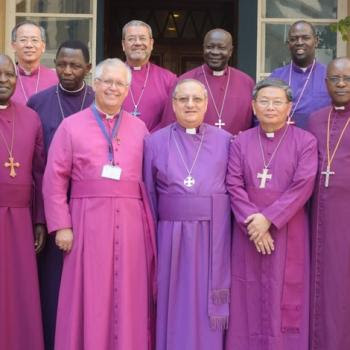
Arlington Street Anglican Church
Westboro Baptist Church
Pastors (Christian leaders) must take responsibility for the spiritual health of today’s church, and the nation. We don’t need more marketing plans, demographic studies, or giving campaigns; we need churches as outlined in the Book of Acts filled with the Spirit of God. Disciples making more disciples of Christ.
The Institutional churches and the prosperity gospel have emasculated the church. It will be the church of Laodicea:
“‘I know your works: you are neither cold nor hot. Would that you were either cold or hot! So, because you are lukewarm, and neither hot nor cold, I will spit you out of my mouth. For you say, I am rich, I have prospered, and I need nothing, not realizing that you are wretched, pitiable, poor, blind, and naked. I counsel you to buy from me gold refined by fire, so that you may be rich, and white garments so that you may clothe yourself and the shame of your nakedness may not be seen, and salve to anoint your eyes, so that you may see.” Revelation 3:15-18
This is the church that is “Left Behind” to experience the wrath of God with the Trumpet and Bowl judgements. As I have explained previously, each of the seven churches of Revelation 2 and 3 represent the church in each of the seven years prior to Jesus return (70th week of the 70 Weeks Prophecy given to Daniel by Gabriel – Daniel 9:24-27). The church of Laodicea is the last church that will live through the seventh year when the wrath of God is poured out on an unrepentant world. The previous church, the church of Philadelphia is the church that is raptured.
“‘I know your works. Behold, I have set before you an open door, which no one is able to shut. I know that you have but little power,and yet you have kept my word and have not denied my name… Because you have kept my word about patient endurance, I will keep you from the hour of trial that is coming on the whole world, to try those who dwell on the earth. I am coming soon. Hold fast what you have, so that no one may seize your crown.” Revelation 3:10-11
Which church will you belong to the church of Philadelphia or the church of Laodicea?
The church of Jesus Christ is a community of redeemed sinners bound to their Lord and to one another in the bond of love known as the covenant of grace. God gives Himself to them with the Holy Spirit to be their God and takes them as His people.
“But the Helper, the Holy Spirit, whom the Father will send in my name, He will teach you all things and bring to your remembrance all that I have said to you.” John 14:26
The covenant promise to the Jews was spelled out in Leviticus. “And I will walk among you and will be your God, and you shall be my people.” Leviticus 26:12
Likewise, Christians belong to their covenant Lord: “None of us lives to himself and none of us dies to himself…whether we live or whether we die, we are the Lord’s” (Romans 14:7–8). This also means that Christians are bound to one another and must think of themselves as part of a community.
Paul expresses this truth using the language of the body in Ephesians 4:25: “We are members of one another.” We are therefore to take our covenant brothers and sisters into account in all aspects of our Christian living. The covenant community is no place for rugged individualists. We must constantly be asking, “How will this affect other believers?”
If we love our covenant brothers and sisters, we will seek what is best for them, especially their growth in grace. This can be done in a positive way by exhortation and mutual encouragement. The writer to the Hebrews, after speaking of the blessings of the new covenant that are provided by the blood of Jesus, has this stirring call for God’s people:
“And let us consider how to stir up one another to love and good works, not neglecting to meet together, as is the habit of some, but encouraging one another, and all the more as you see the Day drawing near” (Hebrews 10:24–25)
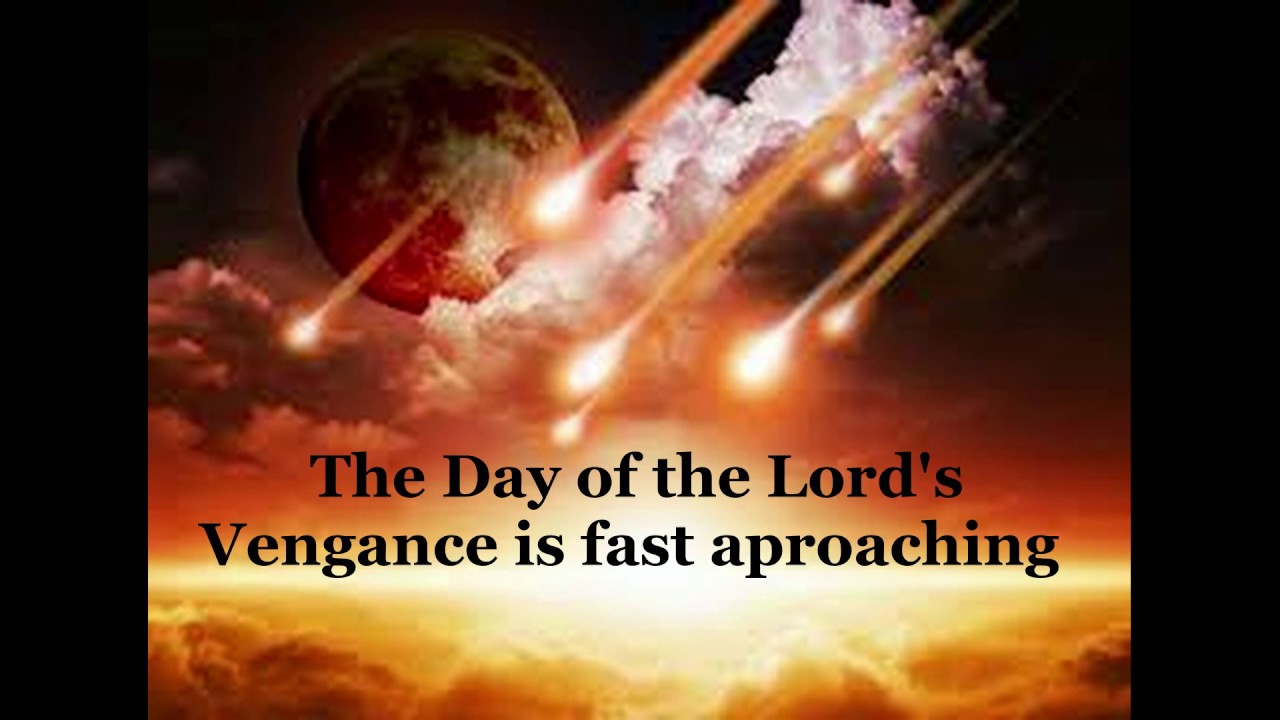
What Day is drawing near? The Day of the Lord
“For the day of the Lord is near upon all the nations. As you have done, it shall be done to you; your deeds shall return on your own head.” Obadiah 1:15
Woe to you who desire the day of the Lord! Why would you have the day of the Lord?Is not the day of the Lord darkness, and not light, and gloom with no brightness in it?” Amos 5:19-20
“Alas for the day! For the day of the Lord is near, and as destruction from the Almighty it comes.” Joel 1:15
“The sun shall be turned to darkness, and the moon to blood, before the great and awesome day of the Lord comes.”Joel 2:31
“The great day of the Lord is near, near and hastening fast; the sound of the day of the Lord is bitter; the mighty man cries aloud there. A day of wrath is that day, a day of distress and anguish, a day of ruin and devastation, a day of darkness and gloom, a day of clouds and thick darkness, a day of trumpet blast and battle cry against the fortified cities and against the lofty battlements.”Zephaniah 1:14
Neither their silver nor their gold shall be able to deliver them on the day of the wrath of the Lord.” Zephaniah 1:18
“For behold, the day is coming, burning like an oven, when all the arrogant and all evildoers will be stubble. The day that is coming shall set them ablaze, says the Lord of hosts, so that it will leave them neither root nor branch. But for you who fear my name, the sun of righteousness shall rise with healing in its wings.” Malachi 4:1
“And I will show wonders in the heavens above and signs on the earth below, blood, and fire, and vapor of smoke; the sun shall be turned to darkness and the moon to blood, beforethe day of the Lord comes, the great and magnificent day. And it shall come to pass that everyone who calls upon the name of the Lord shall be saved.” Acts 2: 19-21
“Now concerning the times and the seasons, brothers, you have no need to have anything written to you. For you yourselves are fully aware that the day of the Lord will come like a thief in the night. While people are saying, “There is peace and security,” then sudden destruction will come upon them as labour pains come upon a pregnant woman, and they will not escape.” 1 Thessalonian 5:1-3
“But the day of the Lord will come like a thief, and then the heavens will pass away with a roar, and the heavenly bodies will be burned up and dissolved, and the earth and the works that are done on it will be exposed.” 2 Peter 3:10
All of the above Scriptures reveal that the awesome Day of the Lord is a time of intense judgement for unbelievers. However, Paul also tells us the good news about the awesome Day of the Lord: “Henceforth there is laid up for me the crown of righteousness, which the Lord, the righteous judge, will award to me onthat day, and not only to me but also to all who have loved his appearing.” 2 Timothy 4:8
We do not like to think about God’s judgement but Scripture is clear the time is coming when God pours out His wrath upon an unrepentant world
(1) The discipline of the church is first patterned after the fact that the Lord Himself disciplines His children (Heb. 12:6) and, as a father delegates part of the discipline of the children to the mother, so the Lord has delegated the discipline of the church family to the church itself (1 Cor. 5:12-13; 2 Cor. 2:6).
(2) Discipline is further based on the holy character of God (1 Pet. 1:16; Heb. 12:11). The pattern of God’s holiness—His desire for the church to be holy, set apart unto Him—is an important reason for the necessity of church discipline. The church is therefore to clean out the leaven of malice and wickedness from its ranks (1 Cor. 5:6-8). A failure to exercise discipline in the church evidences a lack of awareness of and concern for the holiness of God.
(3) Church discipline is to be patterned after and based on the divine commands of Scripture (1 Cor. 4:6). We have numerous passages of Scripture which both command and give us God’s directives on the how, why, when, and where of church discipline. Again, a failure to exercise this responsibility demonstrates a lack of obedience and belief in the authority of the Bible (1 Cor. 5:1-13; Matt. 18:17-18; Titus 3:10; 2 Thess. 3:6-15; 1 Tim. 5:20; Gal. 6:1).
(4) Another basis for the necessity of church discipline is the testimony of the church in the world(1 Pet. 4:13-19). The world observes the behavior and life of the church. When the church acts no differently than the world, it loses its credibility and authenticity (1 Pet. 2:11-18; 3:8-16; 4:1-4).
(1) Discipline must be done by those who are spiritual, truly walking by the Holy Spirit and growing in the Lord. “Brothers, if anyone is caught in any transgression, you who are spiritual should restore him in a spirit of gentleness.Keep watch on yourself, lest you too be tempted. Bear one another’s burdens, and so fulfill the law of Christ.“Galatians 6:1
(2) Discipline must be done in a spirit of humility, gentleness and patience, looking to ourselves lest we too be tempted (Gal. 6:1-2; 2 Tim. 2:24-25).
(3) Discipline must be done without bias, doing nothing in a spirit of partiality (1 Tim. 5:21).
(4) Those who walk disorderly are to be admonished, warned, and appealed to in love (1 Thess. 5:14-15; 1 Tim. 5:1-2; Eph. 4:15; 2 Tim. 4:2). This admonishing, is not restricted to church leaders, but may be done by any person in the body with another if that person is Spirit controlled and spiritually minded (cf. 1 Thess. 5:14 with Gal. 6:1).
(5) If there is no response in repentance and obedience, then the sinning believer is to be rebuked publicly and members of the body are to withhold intimate fellowship through the process and procedure of group disapproval and social ostracism as prescribed in procedures for Church Discipline outlined in step 3, (2 Thess. 3:6, 14-15; Tit. 3:10; 1 Tim. 5:20). This action has a two-fold objective:
It is to indicate to the offender that his/her action has dishonored the Lord and has caused a rupture in the harmony of the body. The goal is always restoration and the person is still to be counted as a brother (2 Thess. 3:14-15).
It is to create fear in the rest of the flock as a warning against sin (1 Tim. 5:20).
FIRST STEP
First, seek private correction and/or reconciliation with the offender (Matt. 18:15). In Matthew 18:15 many manuscripts have “and if your brother sins against you, go and reprove him in private.”
(1) When the problem involves one believer sinning against another, there are two problems that need to be taken care of: reconciliation and restoration (Matt. 5:23-24).
(2) When the problem involves a believer overcome in or by some sin, as was the case in Galatians 6:1, the need is restoration.
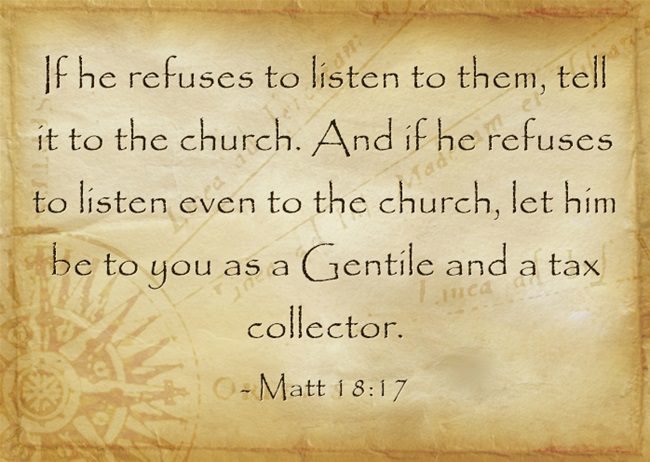
Matthew 18:16-17 should not be limited to the problem of one believer sinning against another in view of Galatians 6:1. So, the one offended or who recognizes the offense or sin is to go privately and try to rectify the problem.
Please note these guidelines:
(1) Begin by expressing your genuine appreciation for the person and their good qualities to show you are genuinely concerned about their welfare. Then and only then bring up the matter which is of concern.
(2) In some situations the sin is apparent and there is no question, but we must allow for the possibility that we have misjudged or have wrong information. We must listen to the other person’s side of the story and seek the facts in the interest of truth and fairness.
(3) If the person fails to respond, warn them that, according to the instructions of Scripture (Matt. 18:16), you will have to get others as witnesses and return with them to deal with the problem.
SECOND STEP
If the first step fails, take witnesses to strengthen the effect of the discipline, preferably spiritual leaders, so that if it has to be brought before the whole church it can be firmly proven and established (Matt. 18:16-17; 1 Tim. 5:19). The aid of church leadership should be sought if the problem involves an offense that is against the whole body or if it is a threat to the unity of the body.
These initial contacts, private and with witnesses, provide opportunity for loving admonition, correction, and forgiveness. On the other hand, if these first steps do not produce results, it constitutes a warning that further action will be taken and provides occasion for serious rebuke (2 Tim. 4:2; 1 Thess. 5:12-13; Titus 2:15; 3:10).
THIRD STEP
If the second step fails, seek reconciliation and restoration through the whole body. If further action is necessary, it is to be taken before the whole church (2 Thess. 3:14-15; Matt. 18:17; 1 Tim. 5:20).
(1) The body is to exercise group disapproval by way of social ostracism (refusal to have intimate fellowship).
(2) If this doesn’t work, the local body of believers is to exercise excommunication: removal from church membership, loss of voting privileges, and continuation of the loss of intimate fellowship. This must be approved of and done by the entire congregation (2 Cor. 2:6).
This is, in essence, the Lord carrying out discipline through the action of the entire body under the leadership of the elders or the spiritually mature (1 Cor. 5:4). Similar heavenly authority is seen in the ratification of this disciplinary action as spelled out in Matthew 18:18-19.
CAUTIONS
If you see the offense or you have accurate knowledge of the sin(s), please note these cautions:
Be sure it is an offense which calls for discipline and not merely one of our pet peeves. Again, the Word must be our criterion.
Remember how we too have sinned in the past and heed the warnings of Galatians 6:1.
Bring the matter before the Lord in prayer before the confrontation takes place (1 Sam. 8:6).
Don’t procrastinate. The longer the delay, the more difficult the condition can become. Remember the consequences listed above.
Don’t gossip or even talk to others about it in the sense of Matthew 18:16 until you have talked to the sinning believer privately. We must guard and protect the person and the flock from rumors and a slanderous tongue (Prov. 6:19b; 10:19; 11:13; 18:8, 21; 20:19).
From article by Jack Wellman: What the church says about church discipline – http://www.patheos.com